Sedona’s red-rock skyline makes an extraordinary frame for the stars, but a beautiful daytime viewpoint does not automatically make a good observing spot. Think about the direction you want to look, the road home and whether you can legally remain after dark.
Start with one location rather than an evening of driving between pins. Visit Sedona’s Secret 7 stargazing map gives useful geographic context. Check access notices separately before setting out.
Beaverhead Flat for an open horizon
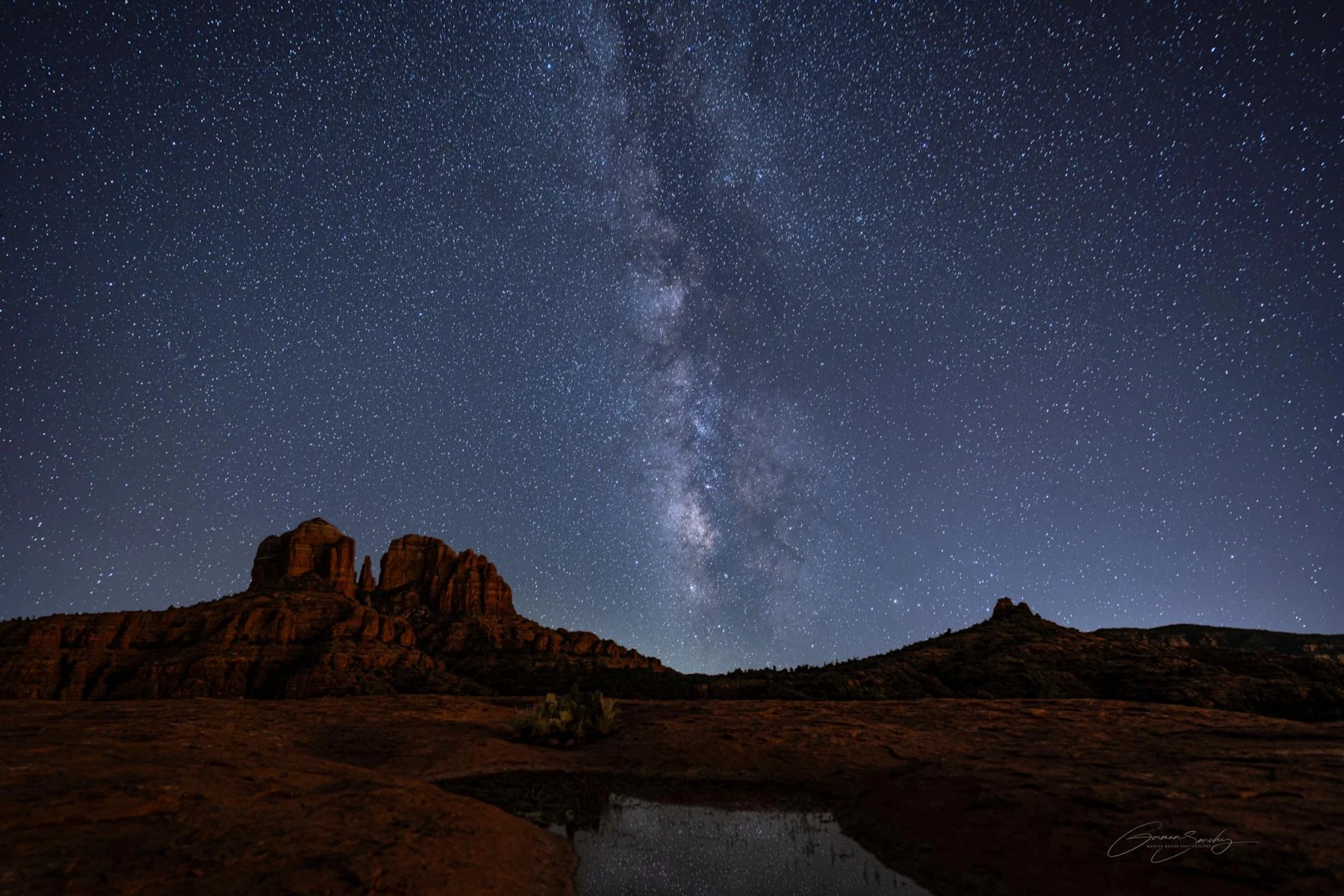
South of the Village of Oak Creek, Beaverhead Flat Scenic Overlook is a useful starting point for a sky-focused outing. Visit Sedona describes an unobstructed night-sky view here, with the Milky Way visible in summer. It is the open outlook, rather than a long hike, that makes this place appealing.
The published approach runs one mile along Beaverhead Flat Road from SR 179. Enter on the right, cross the cattle guard and turn right toward the parking area. Arrive while you can inspect the entrance and ground. Check posted access restrictions before settling in and leave the road and entrance clear.
Centennial when you want to stay closer to town
Centennial Trailhead, off Cultural Park Place in West Sedona, offers a different compromise. Visit Sedona highlights its paved path and suggests arriving before sundown for the red-rock vista as well as the sky. You can familiarize yourself with the approach while the landscape is still visible.
Treat the paved stretch as one part of the visit, not a promise that every surface or viewing position is accessible. Look at the parking signs, choose a comfortable place to stop and avoid heading farther along an unfamiliar trail simply to chase a darker patch.
Two Trees needs a little more preparation
The Two Trees observing area lies between Sedona and Cottonwood, reached from SR 89A on the Forest Road 525 approach. The local Sirius Lookers astronomy club describes setting up in a small field near the radio-control flying field, with a dirt-road approach.
Use the club’s observing-location directions to understand the setting, then check the Forest Service’s road conditions and local signs. Confirm the correct turnout in daylight rather than exploring adjoining tracks after dark. Before an independent visit, confirm night access and parking with the Red Rock Ranger District. Do not assume an observing turnout is also a place to camp.
Dry Creek Road is an area, not one observing site
A search for Dry Creek Road stargazing can lead to several different trailheads. Choose a named destination with clear parking, rather than treating the roadside as a viewing area. In the wider Dry Creek and Boynton Pass area, Visit Sedona identifies Fay Canyon as an observing option with a short approach past the entrance trees.
Parking fees are site-specific. The Forest Service recreation guide marks both Fay Canyon and Dry Creek Vista as recreation-pass sites. Check the current pass requirements and signs for the place you actually use. A parking pass does not override a closure or authorize access beyond posted hours.
Let moonlight shape your Milky Way plans
For the faint band of the Milky Way, choose a clear, moonless window and an open view toward the part of the sky you want to observe. Check both the Moon’s phase and its rising and setting times. A date near new moon is useful, but the conditions during your actual visit matter more than a label on the calendar.
Summer can bring Milky Way opportunities around Sedona, though clouds can still end the evening. Expect a subtle band of light rather than the saturated colors of a long-exposure photograph. A bright Moon changes the goal. Its craters and mountains can be rewarding through binoculars or a telescope, especially away from full moon.
Make the dark comfortable
Allow roughly half an hour or more for your eyes to adapt. Keep your phone dim and use a low red light when you need to move. Bring a warm layer, water and a seat you can carry comfortably. Learn the return route before darkness and tell someone where you plan to be.
Before leaving, check Coconino National Forest conditions for roads, closures and fire or smoke impacts, along with the weather forecast. Keep to permitted routes and parking, pack out everything and give other observers space. Clear sky is never a reason to drive past a closure.
If the forecast turns against you, move the evening back into town. Our guide to Sedona after dark includes films, dinner and music that do not depend on a cloud-free sky.
Choose how much of the night to organize yourself
An independent visit suits travellers who enjoy finding their own constellations and setting their own pace. You do not need a telescope to begin. Binoculars can extend the view, while a sky app helps identify what is above your location on that date.
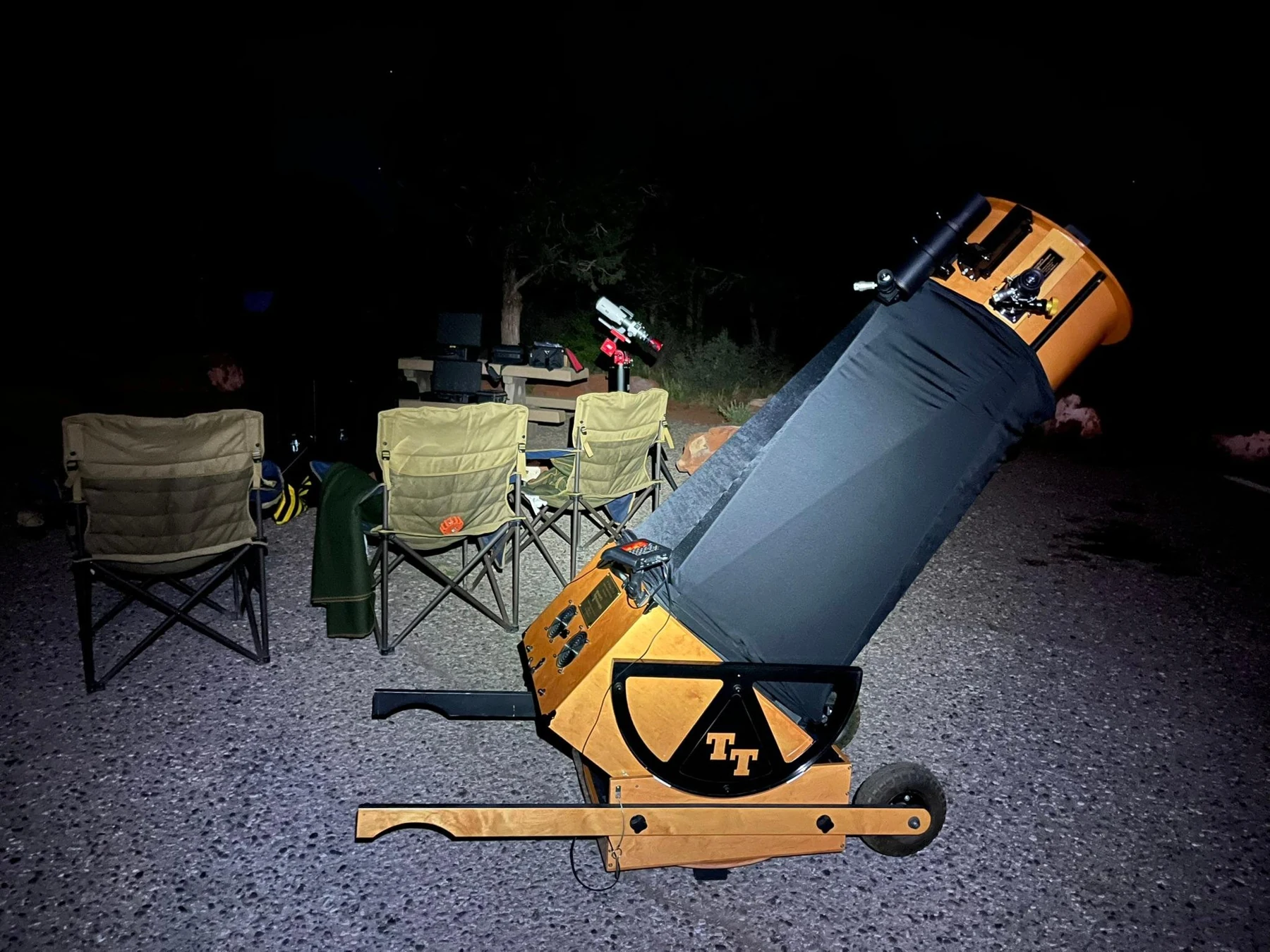
A guided astronomy evening adds someone who can find and explain the objects, plus equipment you may not want to carry. Night Owl’s telescope experience also uses live video astronomy to reveal faint details on a screen. Follow the meeting directions for your booking, since its observing sites vary seasonally. Public observing spots are not interchangeable with a tour’s meeting place.